Shockwave Therapy
Every person moves differently, and so does their recovery.
We use a range of hands-on treatments and therapeutic techniques to complement your physiotherapy care, based on your individual needs, symptoms and goals.
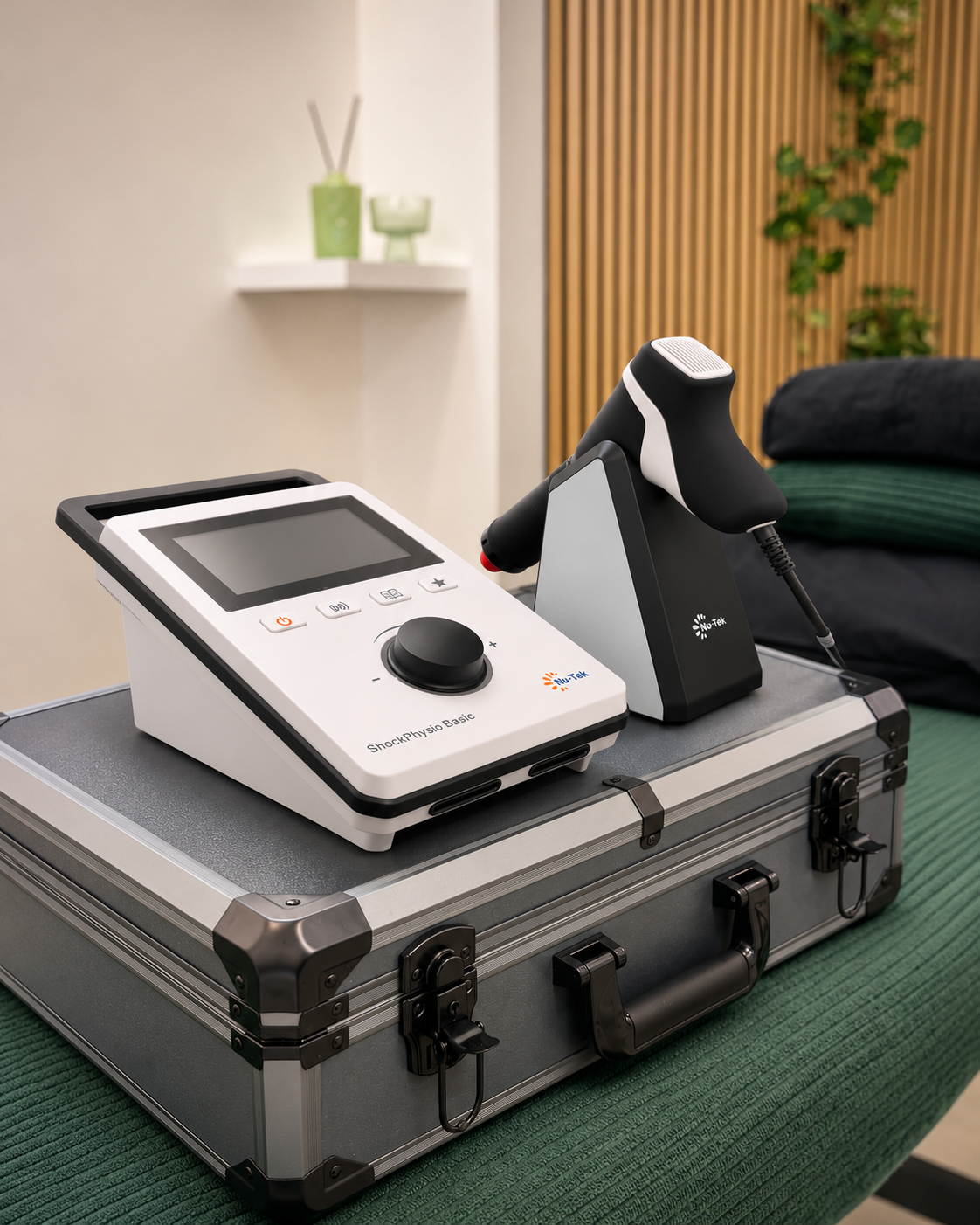
What is Shockwave Therapy?
Shockwave therapy is a non-invasive treatment that uses a handheld device to deliver repeated acoustic pressure waves into targeted areas of the body.
Radial shockwave therapy, also known as radial pressure wave therapy, is commonly used in physiotherapy for selected persistent tendon and soft tissue conditions, including plantar heel pain and tennis elbow.
Who May Benefit from
Shockwave Therapy?
Shockwave therapy may be a helpful option for people experiencing persistent tendon pain, stiffness or discomfort that makes everyday activities or exercise more difficult.
It may be considered for conditions such as:
Plantar Fasciitis (Heel Pain): That uncomfortable heel pain when taking your first steps in the morning or after sitting for a while.
Achilles Tendinopathy: Pain or stiffness around the back of your ankle, especially when walking, running or exercising.
Tennis Elbow: Pain on the outside of your elbow that makes gripping, lifting or even holding a coffee cup uncomfortable.
Golfer's Elbow: Pain on the inside of your elbow, often noticeable when gripping, lifting or using your wrist.
Patellar Tendinopathy (Jumper's Knee): Pain just below your kneecap, particularly during running, jumping or squatting.
Not sure if shockwave therapy is right for you? Feel free to get in touch! We're happy to answer your questions and help you explore whether it could be a suitable option for your needs.
How can it help?
The pressure waves provide mechanical stimulation to the treated area, which may influence pain sensitivity and the body's response to treatment.
For certain tendon-related conditions, shockwave therapy may help reduce pain and improve function over a course of treatment. It is often used alongside progressive strengthening and exercise rehabilitation to support longer-term recovery.
Potential benefits: Reduced pain in selected persistent tendon conditions, improved function and greater comfort with everyday activities.
What to expect
A handheld applicator delivers repeated pulses over the affected area. You may experience some discomfort during treatment, and temporary soreness afterwards.
Treatment intensity is adjusted according to your tolerance.
Your Next Step Starts Here.
Explore your treatment options with personalised physiotherapy care tailored to your needs and goals.